Machine learning–driven insights for freshwater bass fishing.
BassMaster is a data-driven exploration of how environmental conditions, fishing strategy, and behavioral patterns influence bass size and catch success. The project transforms real-world fishing logs into a structured machine learning pipeline, enabling predictive modeling and analysis over factors such as lure choice, water temperature, time of day, and location. Rather than relying on anecdotal intuition, BassMaster reframes fishing decisions as a measurable, experiment-driven problem.
I built BassMaster to combine a long-standing personal hobby with my academic focus in data science. Fishing generates naturally noisy, imperfect data—making it an ideal domain for practicing feature engineering, modeling assumptions, and error analysis. By working with real, self-collected data instead of curated datasets, I wanted to better understand how models behave under real-world constraints and how insights can still emerge despite limited or biased samples.
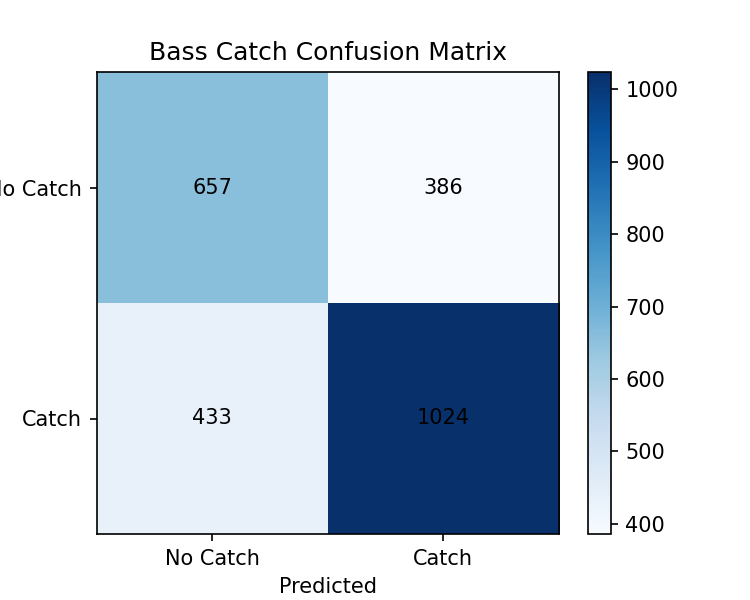
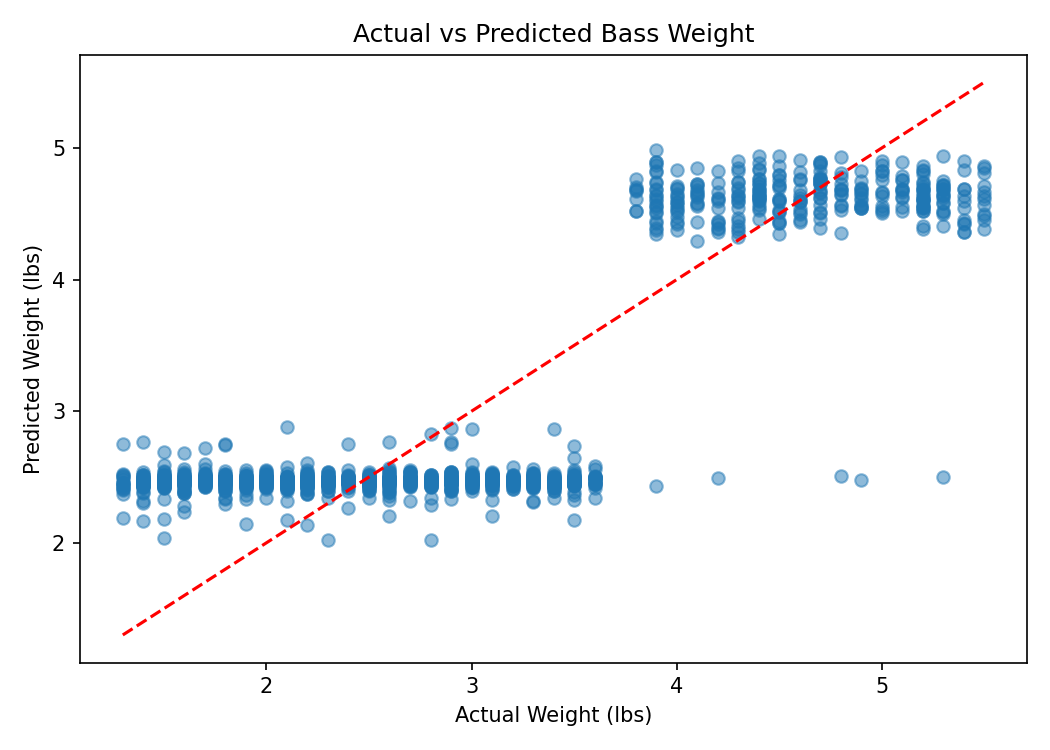
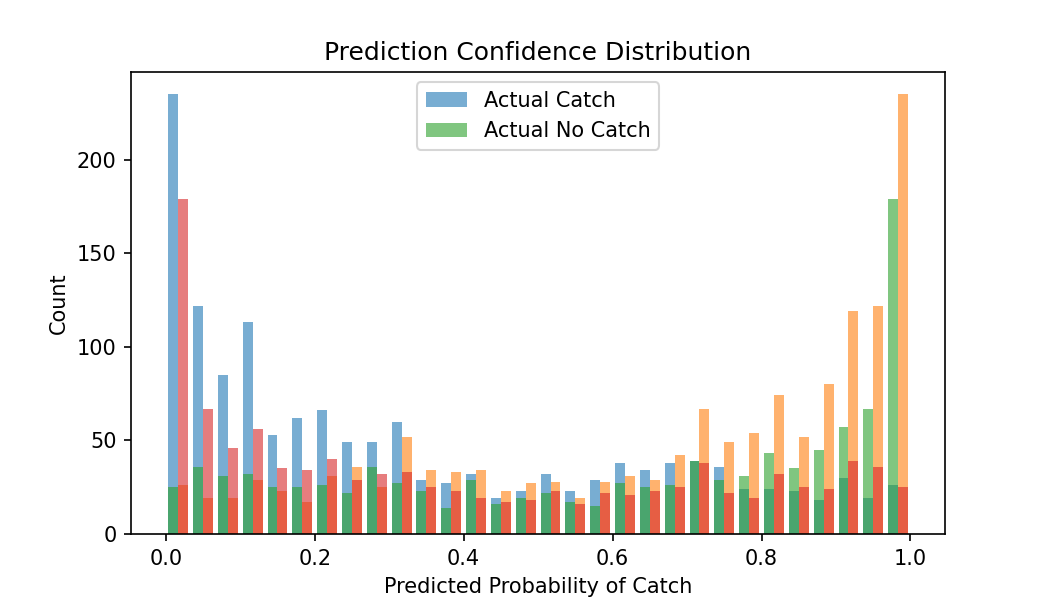
I designed and implemented the full data pipeline end-to-end. This included structuring raw fishing logs into a consistent tabular format, engineering features from environmental and categorical signals, and training both regression and classification models to predict fish size and catch likelihood. I evaluated model performance using held-out data and iteratively refined features to improve stability and interpretability, with a focus on understanding which variables meaningfully influenced outcomes rather than maximizing accuracy alone.